Curaçao Travel Budget:
Our Expert Tips for Enjoying the Island Without Breaking the Bank
Curaçao is often wrongly perceived as a destination reserved exclusively for unlimited budgets.
Yet beyond the luxury resorts lies an authentic island, accessible to those willing to step off the beaten path. Whether you are a solo traveller, a couple, or a family, managing your Curaçao travel budget does not mean compromising on the quality of your experience, but rather optimising it.
As operators based here, we share our local insights to help you turn your stay into a memorable and affordable adventure, while preserving the wild spirit that makes our island so special.
What daily budget should you plan for a trip to Curaçao in 2026?
Wondering how much a trip to Curaçao costs and what kind of budget you’ll need? Let’s be clear: it’s never really been a cheap destination, and with global inflation, if you arrive without a plan, your vacation budget will melt fast.
The key to not blowing your budget? Stop spending like a brochure tourist and start thinking like a local. Here’s how to keep your costs under control while still enjoying the best of the island, whether that’s a private sunset cruise or a scuba diving trip.
1. Accommodation : All-Inclusive vs Airbnb
All-inclusive sounds convenient, but at what cost? In most cases, even a mid-range resort comes with a hefty nightly price tag.
- The smarter move: a good Airbnb paired with your own groceries can save you a substantial amount over a week. That’s roughly the cost of a try dive, or several outings if you’re already certified.
- The electricity trap: power isn’t cheap here. Most rentals have a separate meter, so if you run the AC full blast with the windows open, expect a nasty surprise at checkout. Be smart about it: use the AC to sleep, not to cool down the iguanas in the yard.
2. Car rental: avoid clunkers and shortages
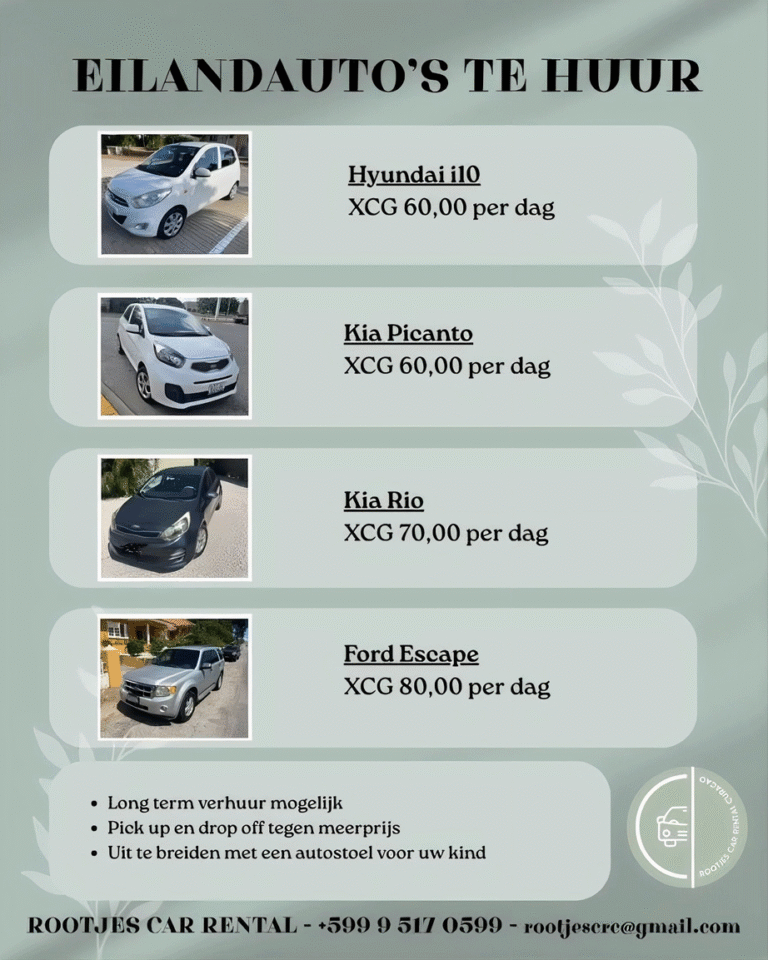
The major international rental companies at the airport are often expensive (around $60 per day), and the local airport agencies are frequently fully booked.
- The locals’ side income: many residents rent out a few cars to supplement their earnings. This is often the best option. Some will even pick you up at the airport for around $15 to $20.
- Captain’s advice: You’ll find all sorts of vehicles out there. Make sure you clearly ask about the overall condition (tires, brakes) before committing. If the renter is a bit vague and uses terms like “island car,” stay cautious, as cars that look ready for the scrapyard are still sometimes offered for rent.
A local rental such as Rootjes Car Rental is often considered a reliable option. There is no financial interest behind this mention, and if they are fully booked, they may be able to point you toward other serious providers.
3. The “freshness tax” at the supermarket: paying 20% extra for a fridge
Even in the larger supermarkets, cold drinks come at a premium. A 20% surcharge is typically applied at checkout when items come from the fridge (the cashier can apparently tell just by touching them).
- Tip: Don’t buy your pack of beers from the fridge if you’re not going to drink them straight away. Take them from the shelf instead. Why pay extra for something chilled when you’re going to cool it in your Airbnb anyway?
4. The supermarket showdown for managing your travel budget in Curaçao
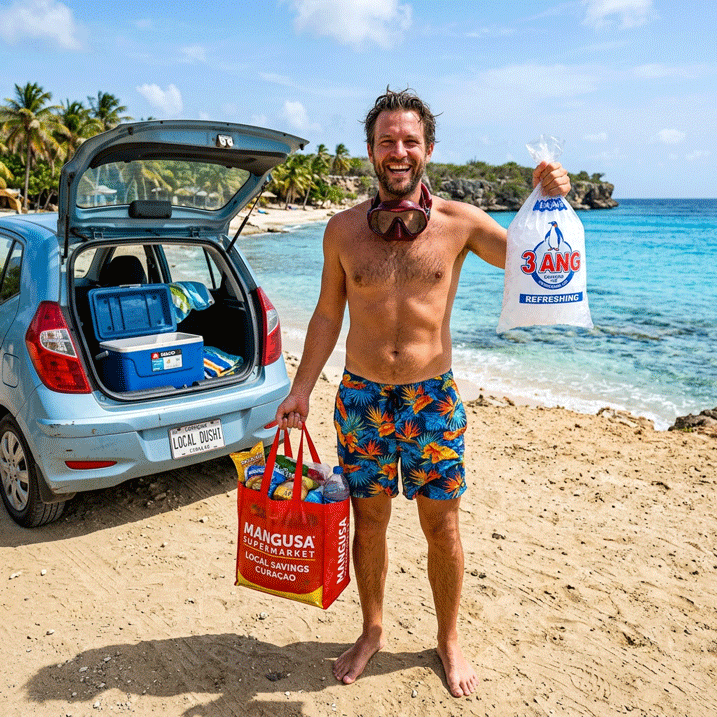
- Mangusa: the temple of low prices. You’ll find unfamiliar brands and the quality can be a bit inconsistent, but for bulk shopping, it’s hard to beat.
- Centrum and Carrefour: closer to standard European or American shopping habits. Quality and product range are both reliable.
- Van den Tweel: positioned in a very tourist-heavy area, where some products are sold at noticeably inflated prices.
- Local tip: don’t overlook small neighbourhood fruit and vegetable shops. With no heavy staffing costs or fancy infrastructure, produce there is often cheaper than in supermarkets..
5. Beaches: your cool box is your best friend
The private beach clubs with bars are nice, but paying top price for a soda quickly adds up and can seriously impact a travel budget in Curaçao.
- Cool box habit: check your Airbnb first, previous guests often leave one behind. If not, buy a cheap one and leave it for the next guest. It will always cost less than buying drinks at a beach club.
- Cheap ice bags: you can find bags of ice almost everywhere (around 3 ANG). They’ll keep your drinks cold all day on a beautiful public beach like Klein Knip.
6. Restaurants: Plasa Bieu vs tourist traps
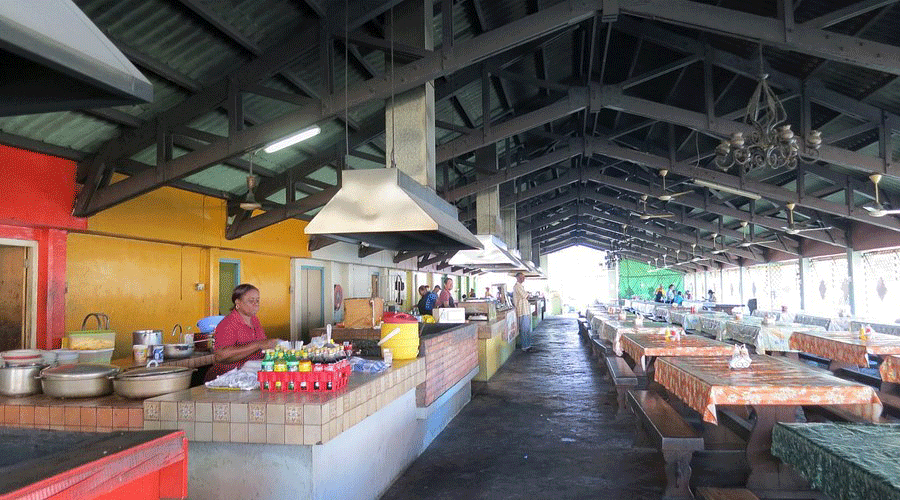
For lunch, head to Plasa Bieu in Punda. This is where the locals eat. It’s hearty, authentic, and offers the best value for money on the island.
For local food, I’ve also listed a few good spots in this article with suggested itineraries.
7. Activities: avoid multinational booking fees
When you book through a major platform, a significant portion of your money goes straight to a multinational company.
- Why book directly with us? At The Little Green Boat, when you book directly, we don’t have to give away part of the price in fees and commissions to third-party platforms. The result: we can be much more generous with our time, the little extras, and the personal welcome we provide. It’s about human connection, not algorithms.
Whether you are looking for a boat excursion, a first scuba diving experience, or you are already a certified diver, the idea is the same:
Choose direct contact for your scuba diving experiences.
8. Currency exchange and ATMs: don’t let the banks eat into your budget
This is often where money is lost without you noticing. In Curaçao, the florin (ANG) is pegged to the US dollar (USD), but the rates applied are not always in your favour
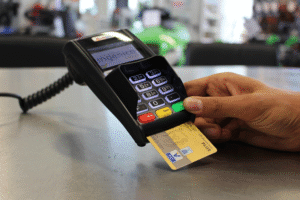
- Captain’s tip: try to pay as much as possible in florins (ANG) for your everyday expenses. At some merchants, card terminals allow you to settle in florins even with a foreign card. If you pay in US dollars, the exchange rate used is often less favourable than the official rate. Over a two-week stay, the difference can easily cover a scuba diving excursion.
- Cash withdrawals: avoid making multiple small ATM withdrawals, as fixed fees are high. Look for banks with lower withdrawal fees, such as RBC.
For a full breakdown of tipping, which ATMs to avoid, and how to manage your cards, see my complete guide: Money and tipping in Curaçao: ANG vs USD, cards and ATMs.
Tap water: don’t pay for it in bottles
This is one of the most common mistakes travellers make. In Curaçao, tap water is produced by a state-of-the-art desalination plant. It is perfectly safe to drink, exceptionally pure, and tastes very clean. Instead of buying packs of bottled water, bring a reusable bottle. It makes a noticeable difference in cost over a family stay, and significantly reduces plastic waste in the marine environment.
10. Happy hours: a national pastime
In Curaçao, people don’t just pay full price for cocktails at any time of day. Each day of the week usually has a specific happy hour spot, often between 5pm and 7pm. That’s when drinks are discounted and the atmosphere is at its best. It’s also a good opportunity to talk with locals and pick up tips on dive sites that are still relatively untouched by mass tourism.
A gift: My travel budget table for Curaçao
Want to know what a typical day really costs? I’ve put together a detailed Excel sheet covering all daily expenses: accommodation, car hire, food, and activities.
It’s an essential tool for planning your trip without stress. I’ve made it available as a free download in the files section of our Facebook group. Feel free to grab it there and ask us any questions.
FAQ Travel Budget Curaçao:
What daily budget should you plan for a trip to Curaçao?
On average, expect to spend between $80 and $150 USD per day per person for a comfortable experience (car rental, accommodation, meals). To optimize your travel, check out our tips for planning your itineraries in Curaçao.
Is scuba diving an expensive activity in Curaçao?
Not at all! Curaçao is famous for its exceptional shore diving, which means no boat fees. Whether you’re a complete beginner or already certified, our private guided dives offer a fully personalized experience at a very competitive price. Even better, every dive is exclusively yours. Check out our dive sites to discover the best places to dive.
What budget do you need to get your scuba diving certifications?
It’s the ideal investment for your holiday. We offer full PADI or SSI training courses, from Open Water for beginners at $550 to Advanced Adventurer at $495, with personalised coaching away from the “factory-style” approach of large-scale dive centres.
How to save money on boat trips and excursions?
Avoid large tourist boats! Booking a private trip with The Little Green Boat allows you to split costs among friends or family while enjoying an exclusive experience. It is the most cost-effective way to access a premium, small-group service.
What is the budget for food in Curaçao?
For eating local and on a budget ($10–15 USD), small popular eateries are your best option. If you are looking for a higher-quality experience, check out our guide to the best fresh fish restaurants on the island, where you can enjoy the local catch without paying “tourist” prices.
How can you get a personalized quote for your diving or boat activities?
To budget your boat trips and diving certifications, contact us directly via our dedicated page to receive a tailored proposal. Do you have other questions about how the island works or our services? You can also check our general FAQ to quickly find answers to your questions.